Full-Fat Dairy Products?
Now that the 2025 Dietary Guidelines are irresponsibly promoting the consumption of high-fat dairy products (up to 3 servings per day, depending on your calorie intake), it seems like the right time to revisit The Cheese Trap, a book by best-selling author and PCRM Founder, Dr. Neal Barnard.
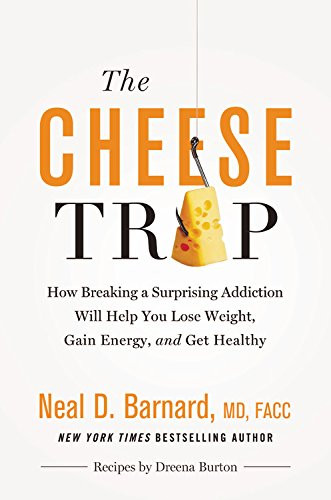
I reviewed this book a few years ago when it first released. Let me share a few of the highlights:
-
- Cheese is 70% fat, and the highest source of saturated fat in the American diet.
- How cheese is made (did you know cheese is made with bacterial cultures, one specifically called Brevibacterium – which is the bacteria found between human toes? So you shouldn’t be surprised if your cheese smells like stinky feet!) Enzymes are added which causes solids to clump together. The whey protein is drained off, then SALT is added to prevent the bacteria from growing further.
- Americans are now eating over 42 lbs. of cheese per person per year (2024 statistics). That’s over 75,000 calories, and over 6200 grams of fat. In one year.
The Government’s Influence
-
- Several years ago, the US Government and the Dairy Industry held a forum to figure out how to market more cheese. The idea was to determine what triggered cheese cravings, and Dr. Barnard showed the actual slides that were used at the forum (cheese eaters were divided into “Cravers” or “Enhancers”).
- So the Government worked with Wendy’s in order to promote the Cheddar Lovers Bacon Cheeseburger, who successfully sold 2.25 million pounds of cheese during that campaign. That’s 380 tons of fat and 1.2 tons of cholesterol.
- They also worked with Subway (The Chicken Cordon Bleu and the Honey Pepper Melt), with Taco Bell, Burger King, and Pizza Hut (the Ultimate Cheese Pizza, with 1 pound of cheese in ONE serving).
Think about this the next time you see a fast food commercial featuring cheese – because millions of taxpayer dollars are used to promote these unhealthy foods.
The Dietary Guidelines Conflict of Interest?
The same group in charge of the US Dietary Recommendations – who claim that people consume far too much saturated fat, cholesterol, and sodium – is the same government group working behind the scenes to promote more cheese!
The U.S. dairy industry generates approximately $83 billion in combined federal, state, and local tax revenue annually, supported by a total economic impact of nearly $779 billion. While contributing heavily in taxes, the sector also receives substantial government support, including hundreds of millions in annual payouts from programs like Dairy Margin Coverage.
More about the 2025 Dietary Guidelines (Cyd’s write-up, January 2026)
On the PRO side, the guidelines place more emphasis on fruits, vegetables, and water consumption while upholding the limits on saturated fat to 10% of daily calories. Alcohol, highly processed foods, and sugary drinks are also discouraged.
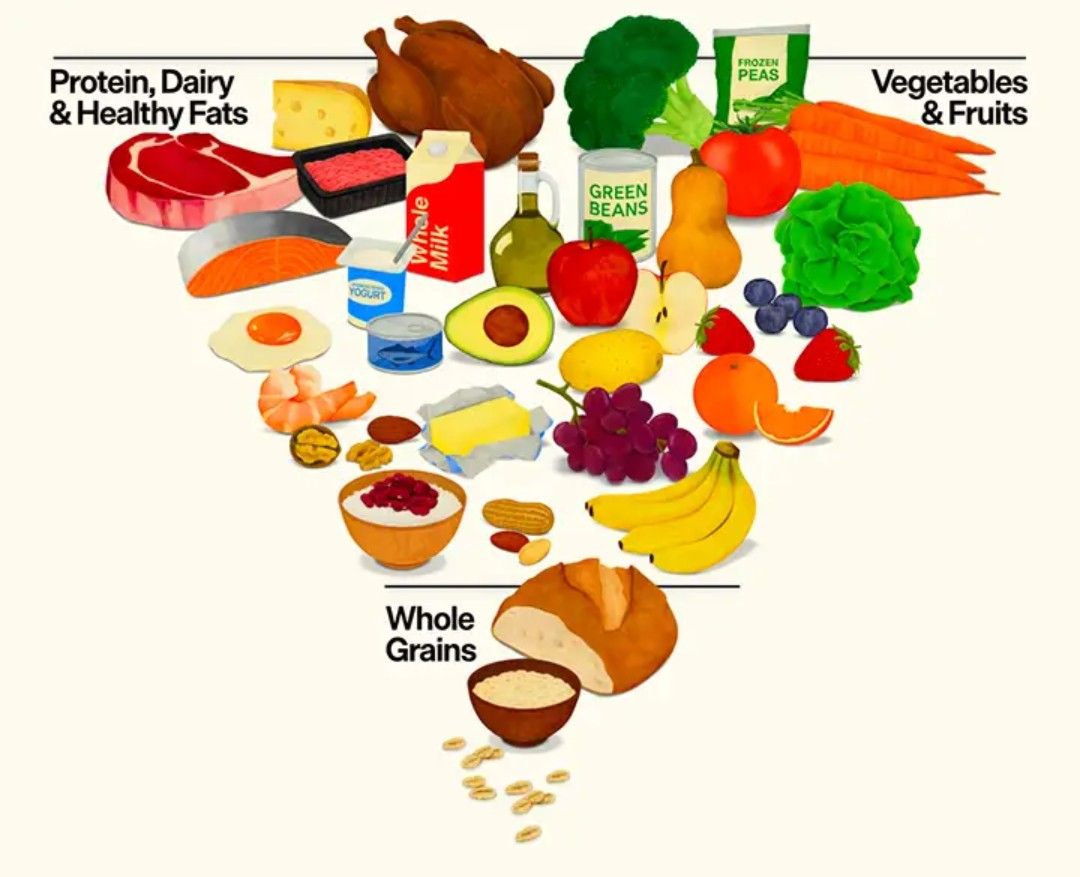
Image on https://realfood.gov/
On the CON side, however, is the confusing, contradictory advice to consume more animal protein, butter, and full-fat dairy – which totally undermines the saturated fat limits. For those eating a 2,000 calorie a day diet, 10% would mean 200 calories of saturated fat, or around 22 grams per day.
Those eating meat, processed meat, butter, cheese, and ice cream (not to mention baked goods, pizza, and fried foods) will easily exceed that amount. But the American public, for the most part, has no idea what “10% of calories from saturated fat” looks like, or even where the fat is coming from.
It should be noted that the American Heart Association recommends reducing saturated fat to less than 6% of daily calories for those who need to lower their cholesterol. That’s about 11 – 13 grams per day.
What are we to do?
So while the meat and dairy industries may be celebrating the new food pyramid,* we Americans should not. The recommendations on protein and fats (including butter and beef tallow) are not aligned with current evidence.
Not only is the advice confusing, especially for people trying to make healthy choices, it’s harmful, especially to those who are impacted by these guidelines through federal nutrition programs (schools, senior centers, hospitals, the Center for Disease Control, and government assistance programs such as SNAP, WIC, and others).
Sadly, the population in the United States continues to grow heavier and sicker each year. Oh that we would follow a healthier model!
The Canada Food Guide, for example, has removed dairy as a required food group, and emphasizes plant-based proteins. Americans deserve evidence-based public health guidelines that prioritize human well-being and rely on independent research untainted by industry funding or political pressure.